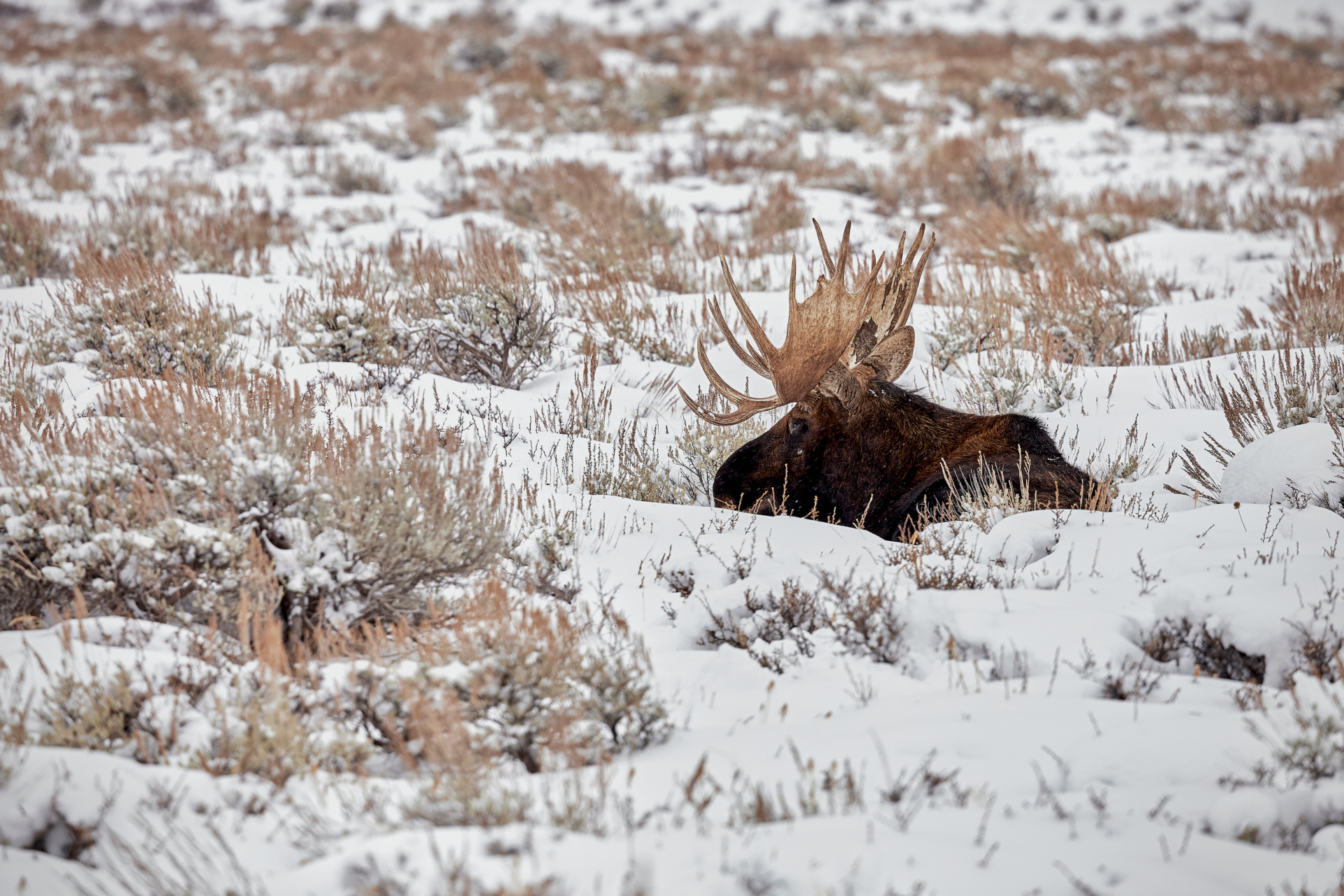
In late autumn the moose in Jackson Hole move to the sage flats to hang out together and eat the Antelope Bitterbrush that also grows in the flats. Moose will eat sagebrush as a survival food, but they don’t like it. You’d think that a nearly black, seven-foot tall member of the deer family, complete with massive antlers would be easy to see lying in the sage, but they aren’t, and it’s quite easy to walk up on them, which isn’t a good idea. Moose can be very aggressive, particularly in the fall near their mating season.
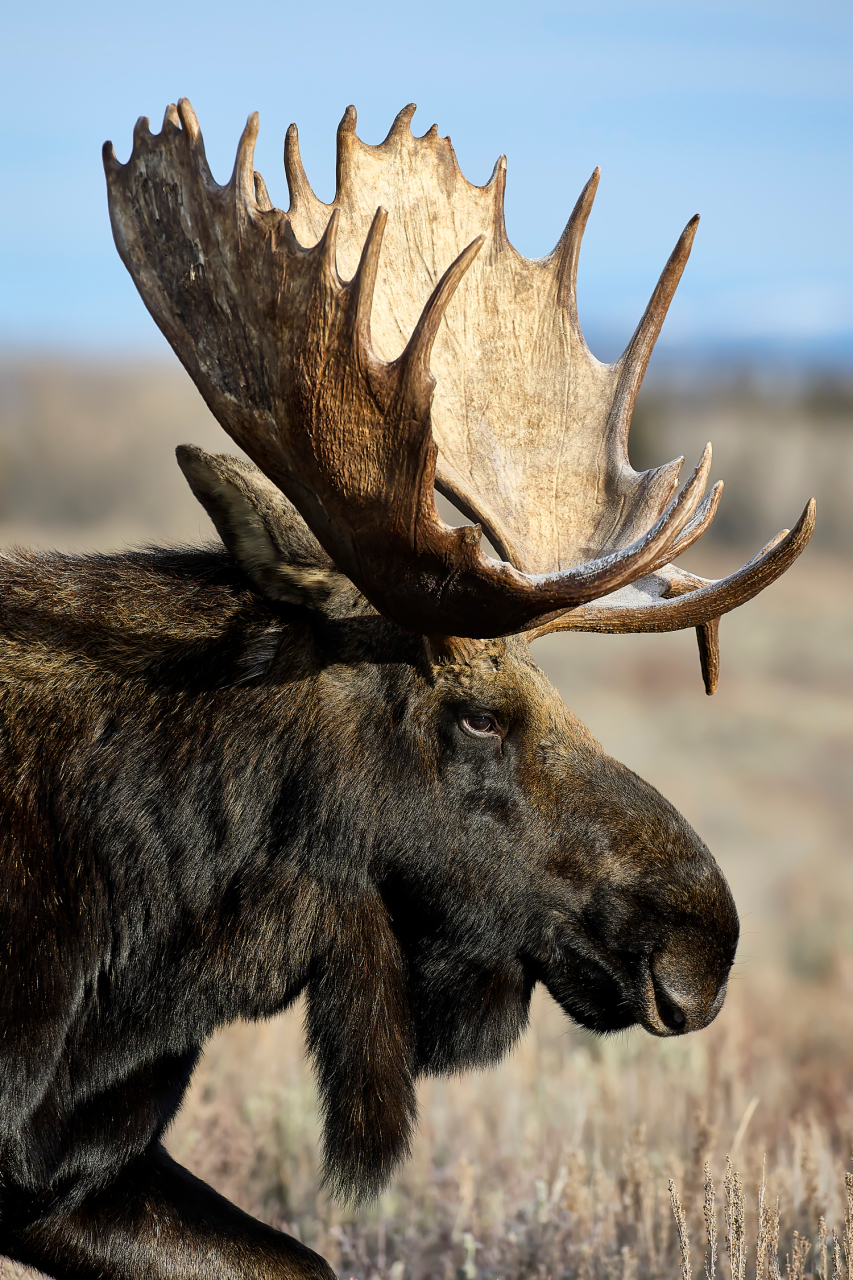
This is Hoback, one of the most famous Bull Moose in the Tetons, in his prime in 2021. He’s since become a senior citizen and isn’t quite as flashy, but the last time I saw him he was still an impressive sight.
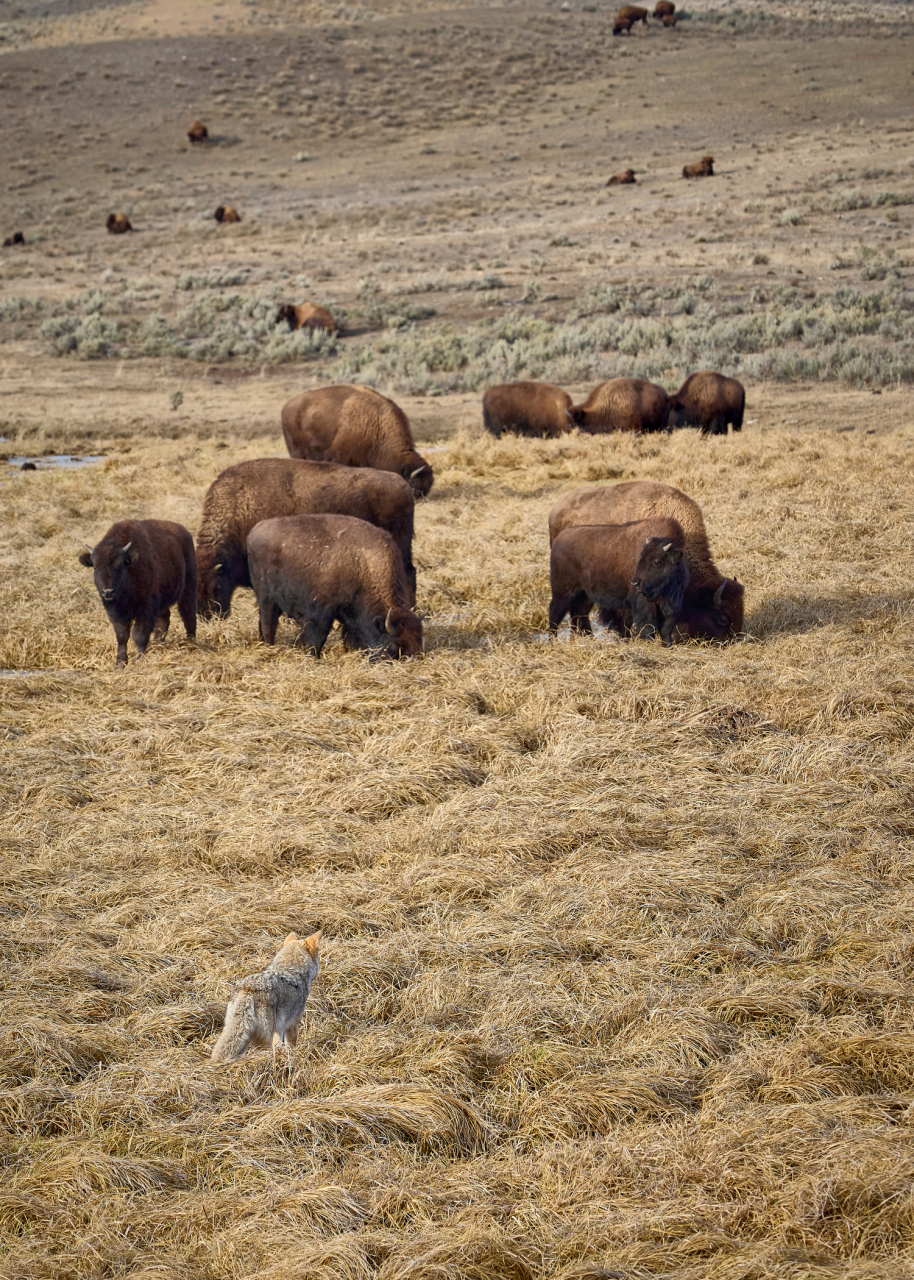
Bison are a keystone species and as such they help shape their environment a great deal. One way is that thanks to their large size, they flush out rodents, making them easier for Foxes and Coyotes to catch in a form of symbiosis called “Commensalism,” a relationship where one organism benefits (the coyote/fox) while the other (the bison) is neither helped nor harmed.. So, while it may look like this Coyote is wistfully dreaming about a Bison dinner, in reality he’s on high for more Coyote-sized prey to appear.
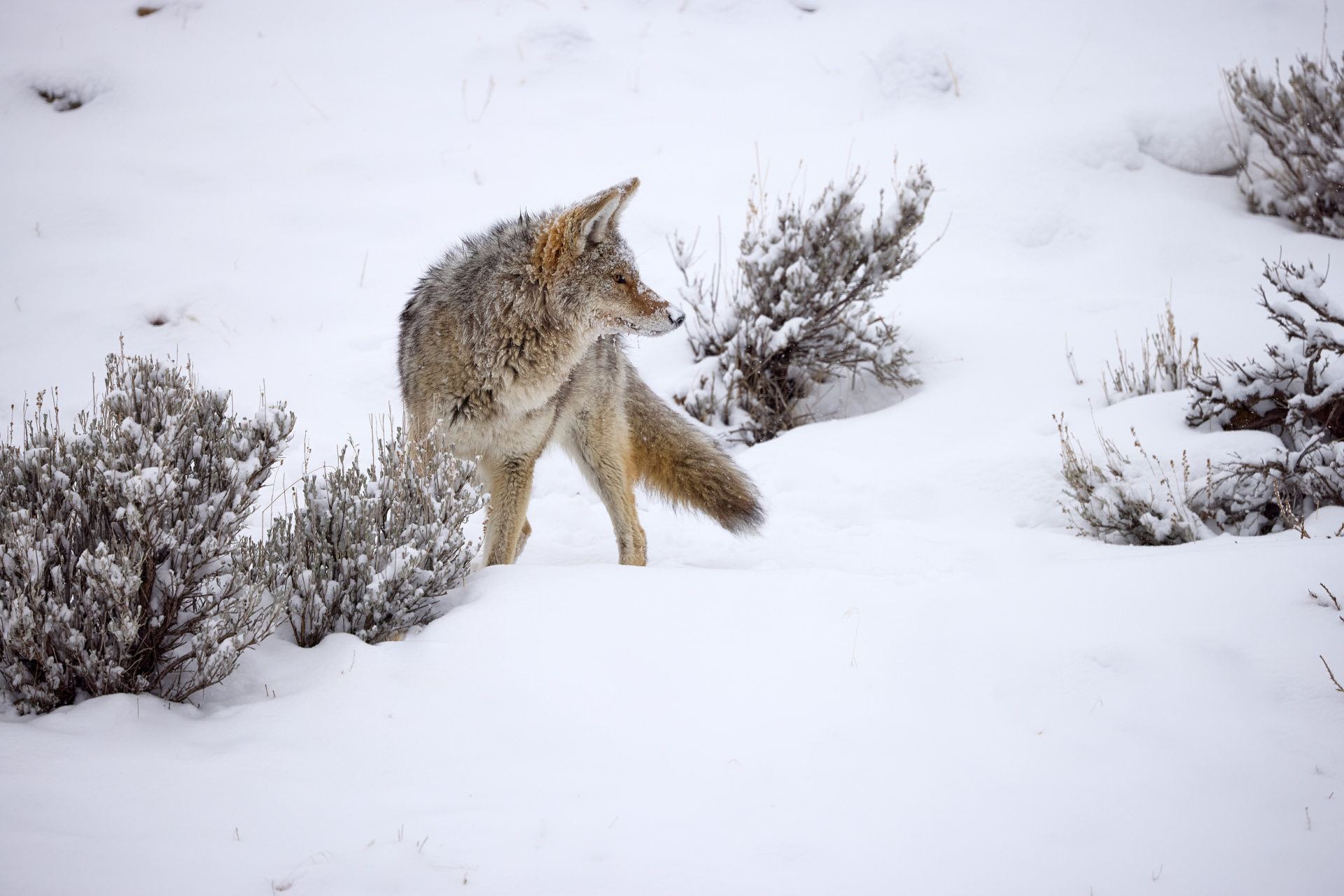
Since the reintroduction of Wolves in 1996 Coyotes are no longer Yellowstone’s top dog. Wolves kill coyotes to reduce competition from them and as a result, Coyotes are very to every little thing in their environment today.
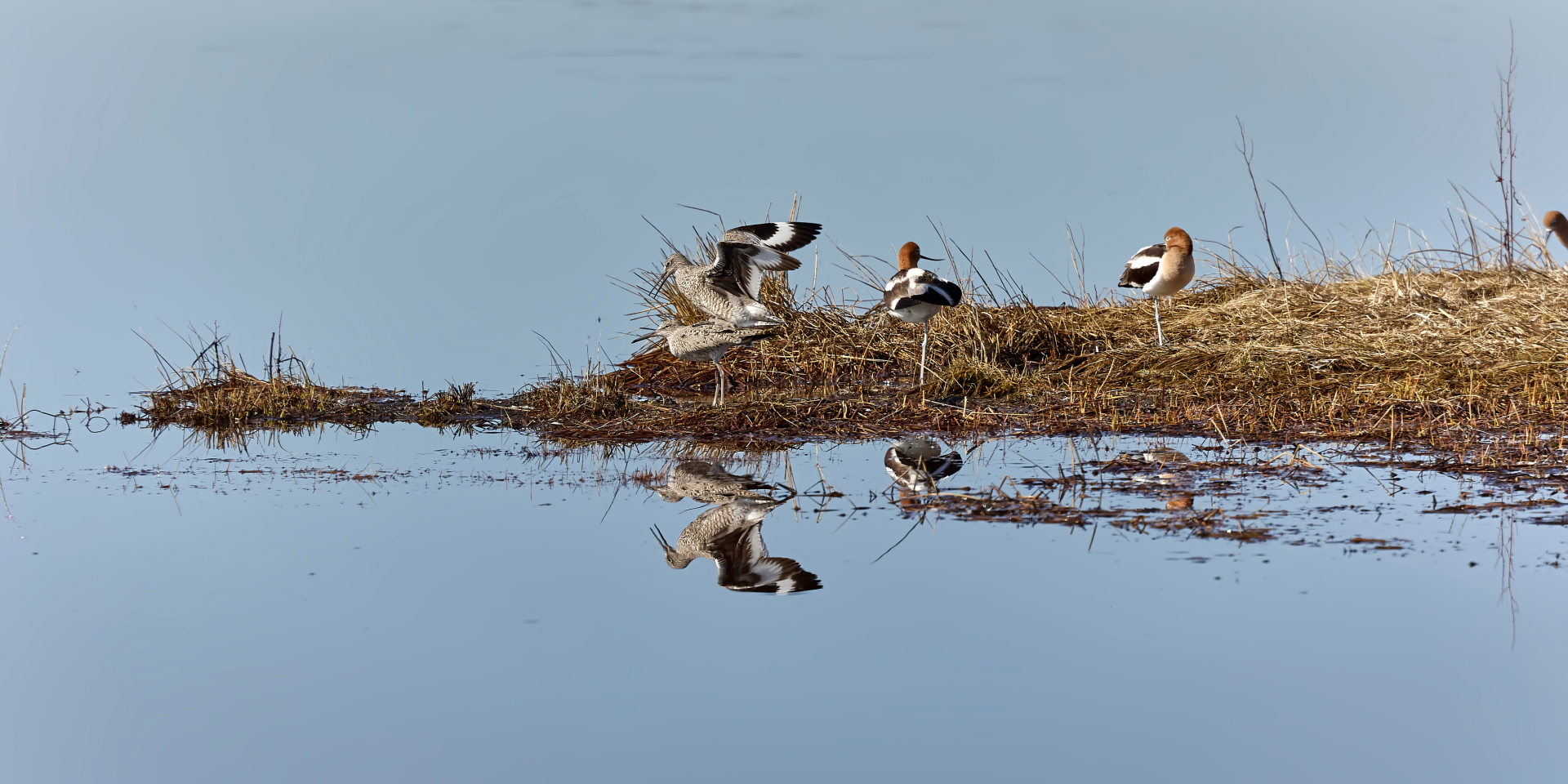
Marshes in the Rocky Mountains are filled with shorebirds like these Willets and Avocets in the spring, and they always put on a show if you’re willing to get out early and sit patiently. I don’t do patient very well, but marshes have been special places to me since I was a boy back in Indiana trying to trap muskrats. I was never much of a threat, but I fell in love with the sights, smells and sounds of marshes that has only intensified over time.
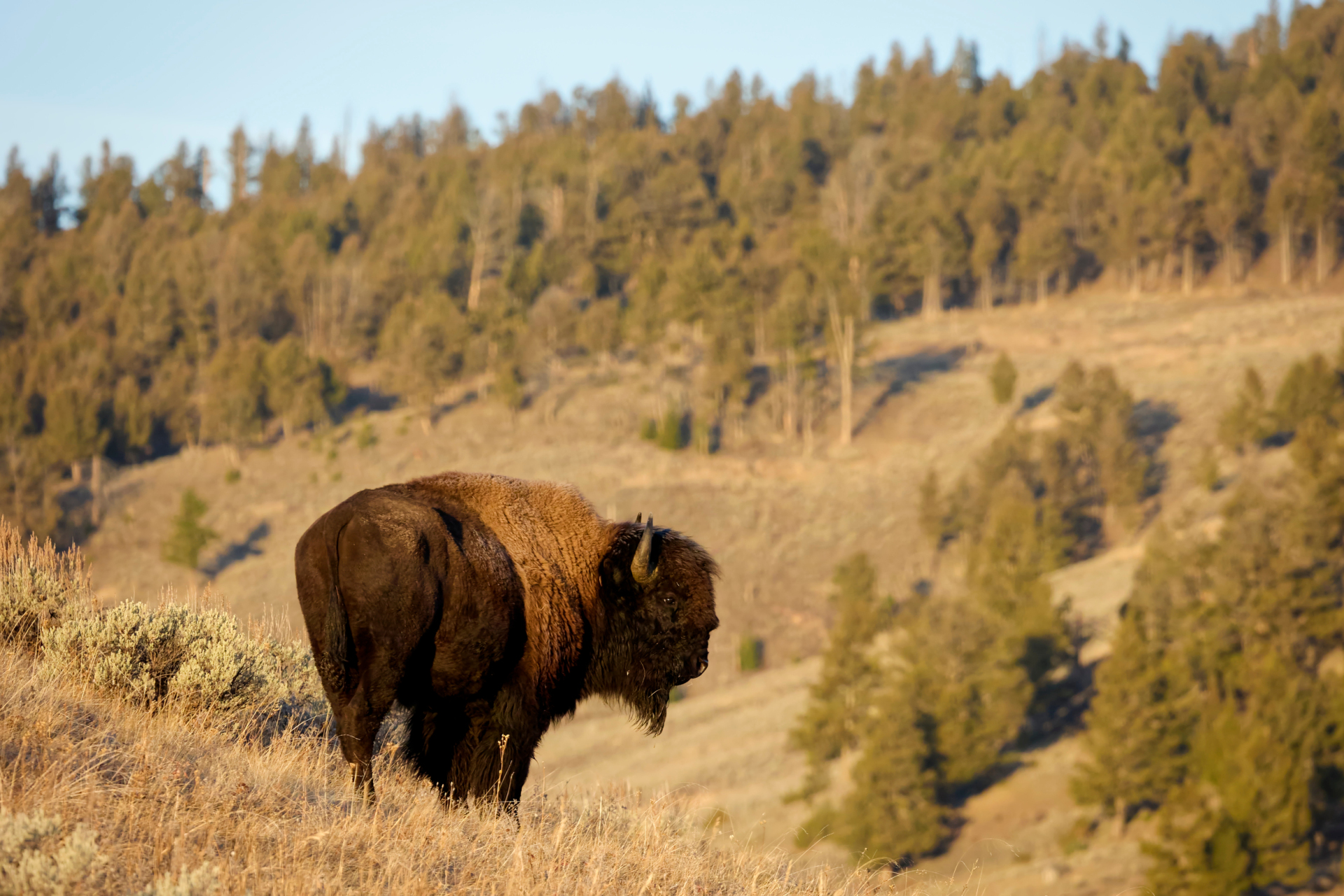
Mature Bull Bison fear nothing. In Yellowstone if you see a big Bison walking alone, it’s a bull. They are 2000 pounds of death for any predator (or careless visitor) who carelessly crosses them. They have stout, sharply pointed horns, can run 40 mph, jump over a four-foot fence from a standing start, and they always seem just a little bit grumpy to me.
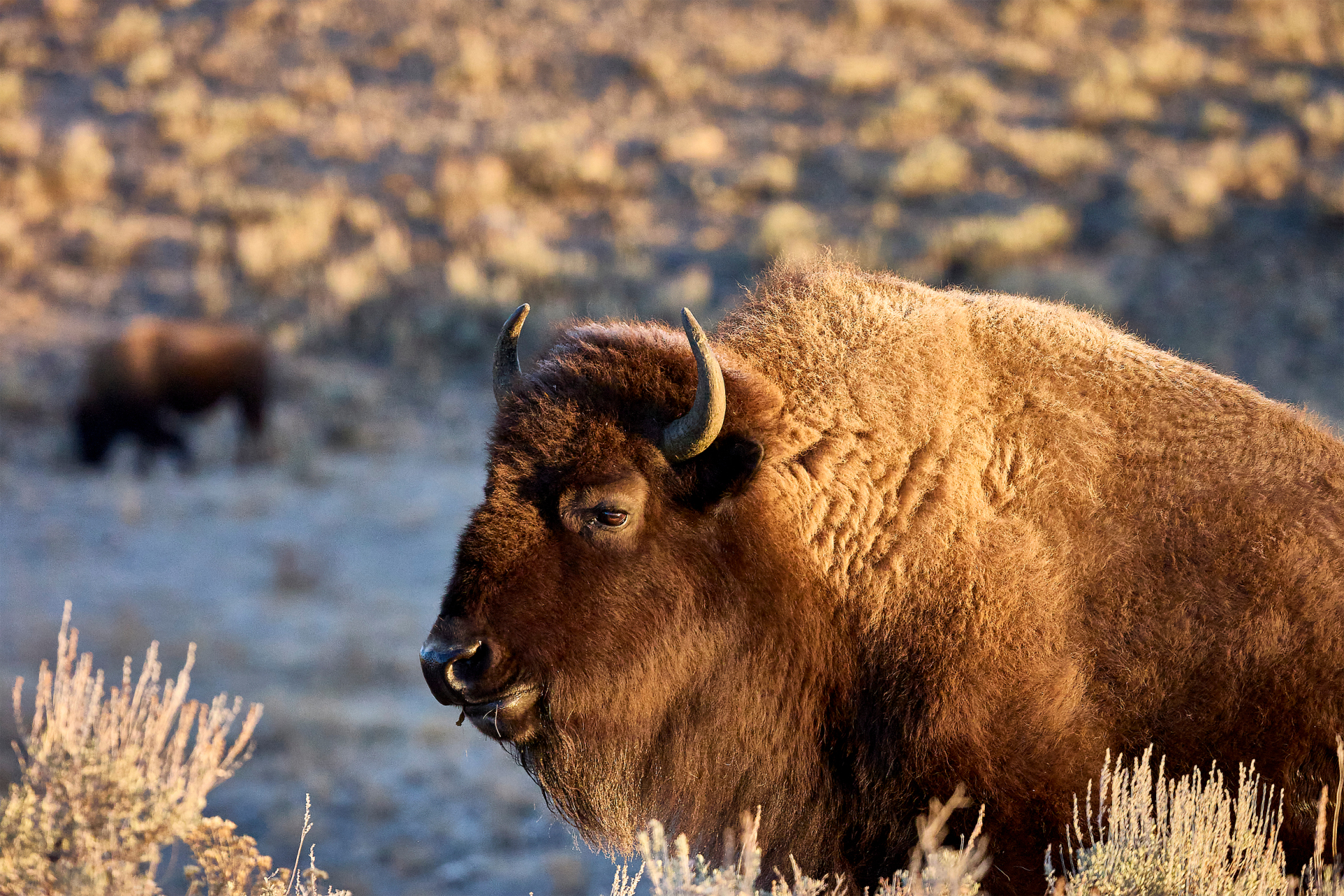
Unlike the big Bull Bison, cows and calfs hang out together in herds for protection. The herds are led by a lead cow who knows where to find food and water, where to cross the rivers, and essentially is the wise woman of the herd.
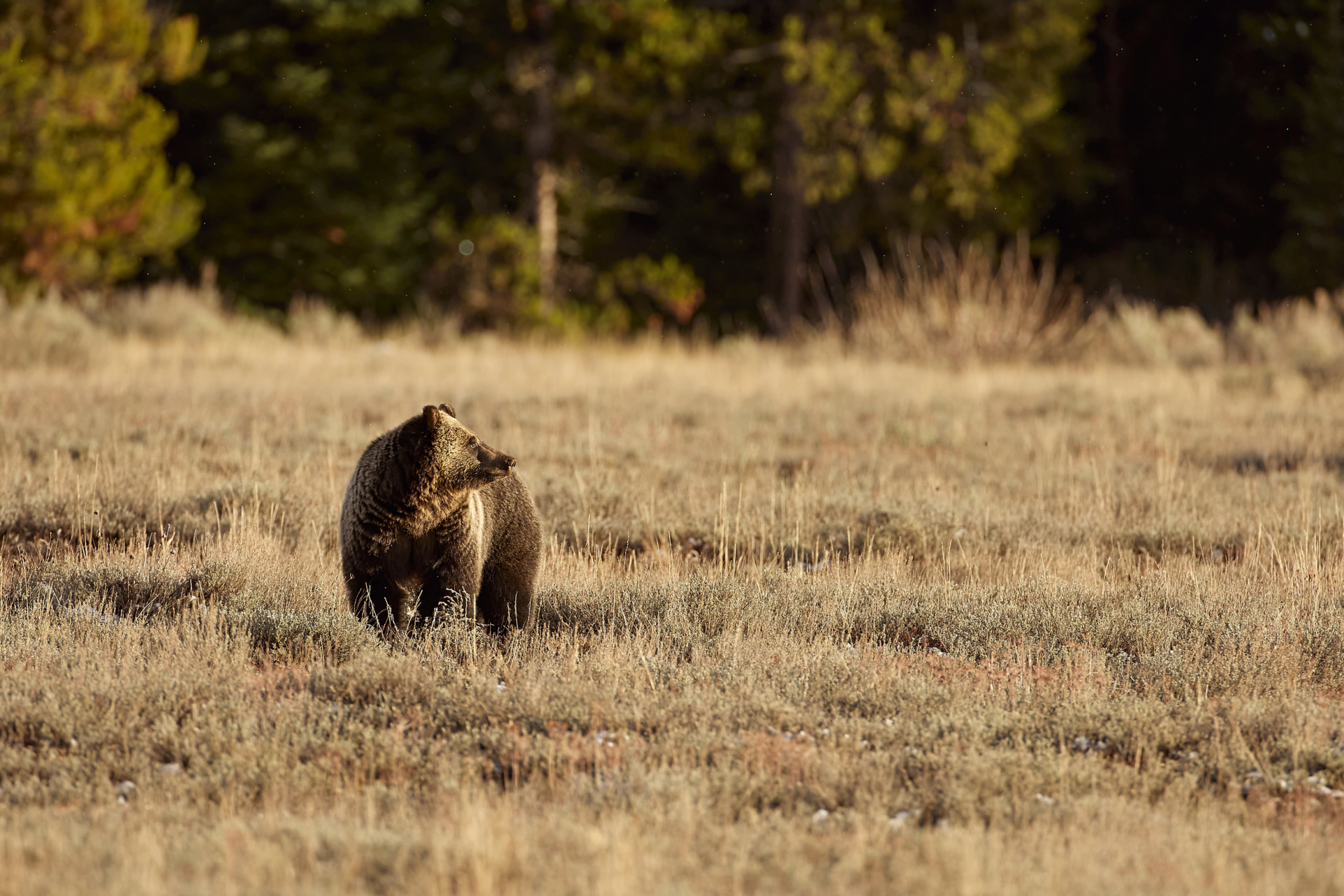
Our wild cousins are smarter than most humans will admit, and especially predators. They have to be able to reason and outsmart their prey, after all, and they don’t have to spend every waking minute eating grass,, so they can stop and smell the roses. This young grizzly bear was grazing in this meadow, but every so often would stop to watch the sunset.
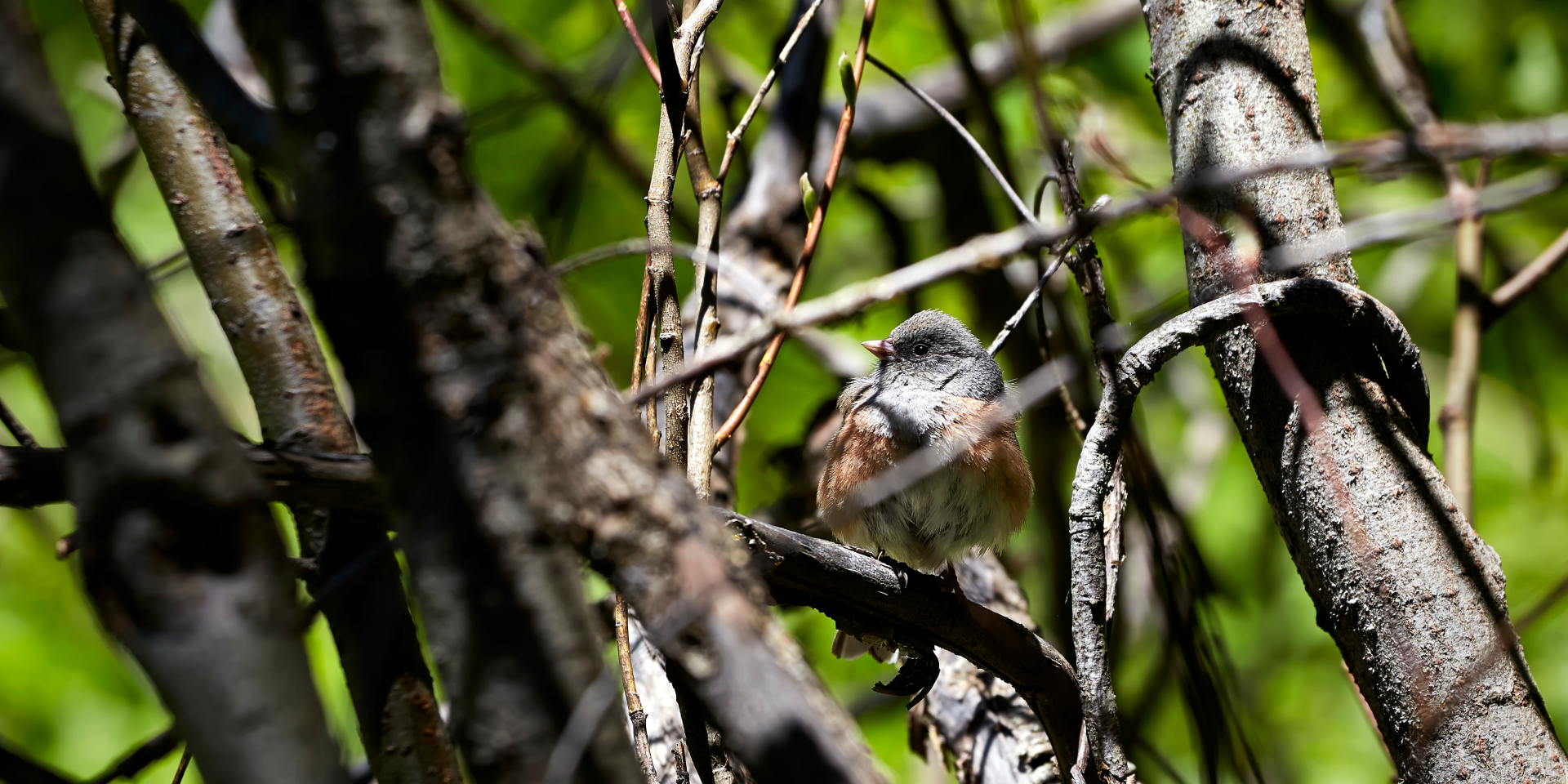
I’m from the Great Lakes, so many birds and animals that westerners see as common are still as exotic as Hell to me, and Oregon Juncos certainly are. They are beautiful, precocious, and they sit still long enough for me to make their portraits. What’s not to love?
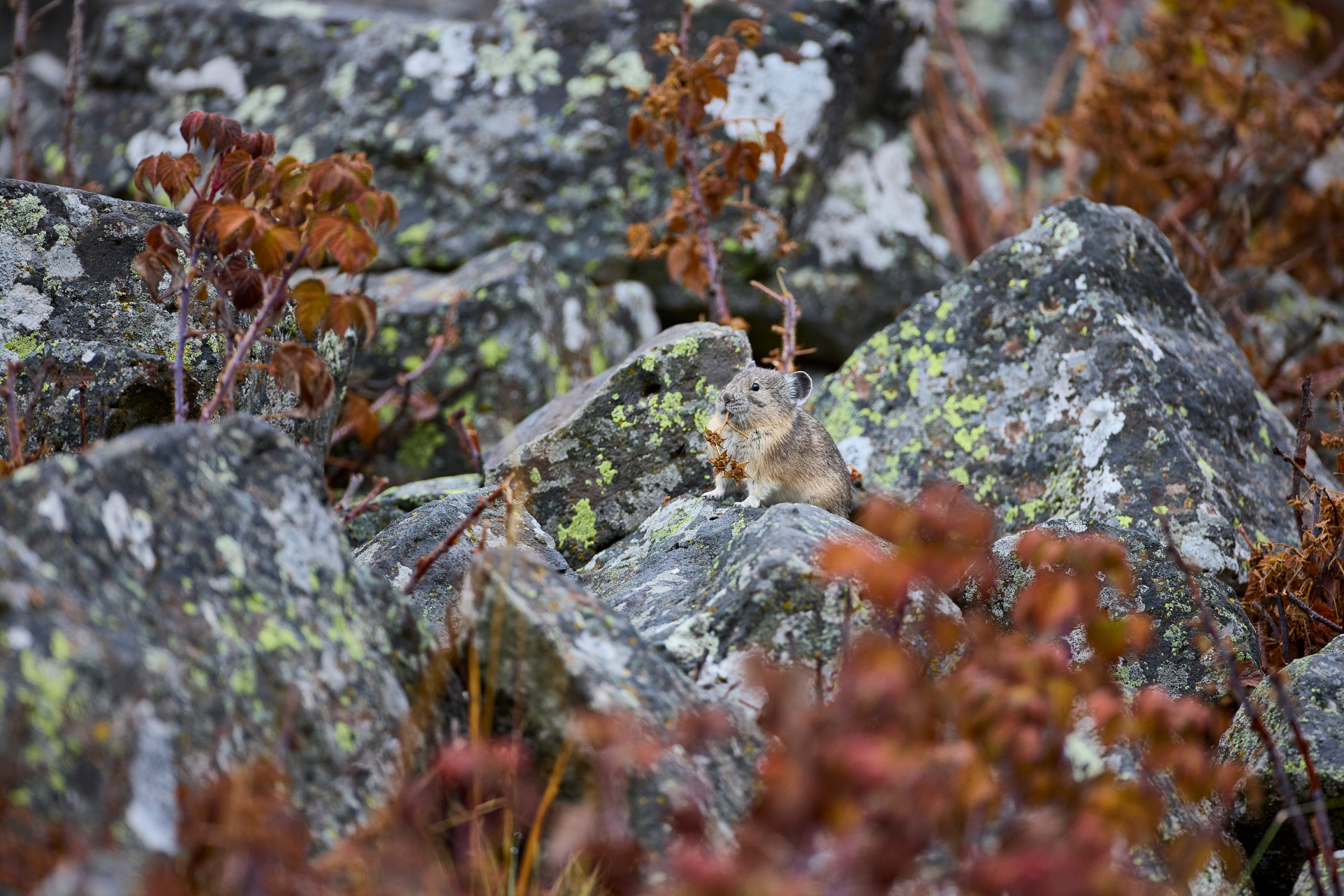
Pika are always in the running for most adorable animal in the world. They are the smallest member of the rabbit family, but are territorial and aren’t tolerant of other Pika crowding them. They bark (well, squeak) to mark their territories. They don’t hibernate, but spend all spring, summer and fall gathering vegetation to store in “haystacks” that can grow to a formidable size. They are well camouflaged, but if you sit beside a high altitude talus slope long enough you may hear them or see them flitting across the boulders like tiny mountain goats.
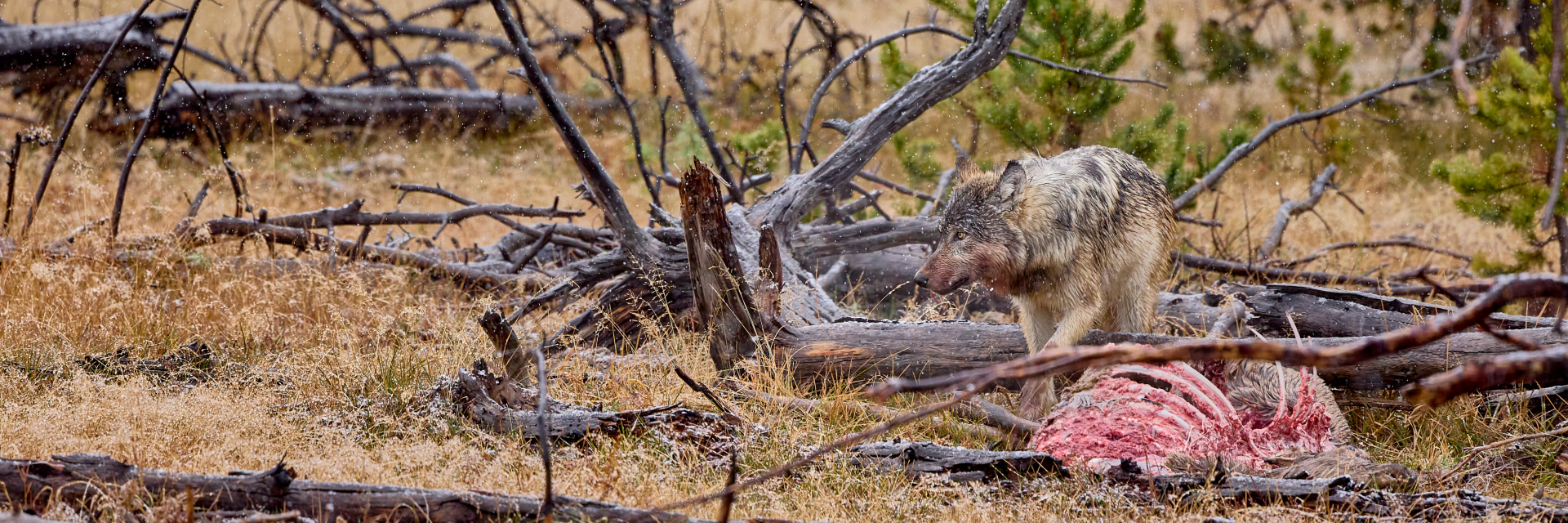
This young wolf is picking the last of the meat off of a carcass that was an adult elk seven hours before this shot was made. I don’t know if they were a low-ranking member of the pack that made the kill, or a lone wolf without a pack. They were very nervous and on high , looking around them after every bite of food, so I would guess lone wolf. If they were and the pack returned and caught them poaching they could be in mortal peril. But this day their bravery paid off.
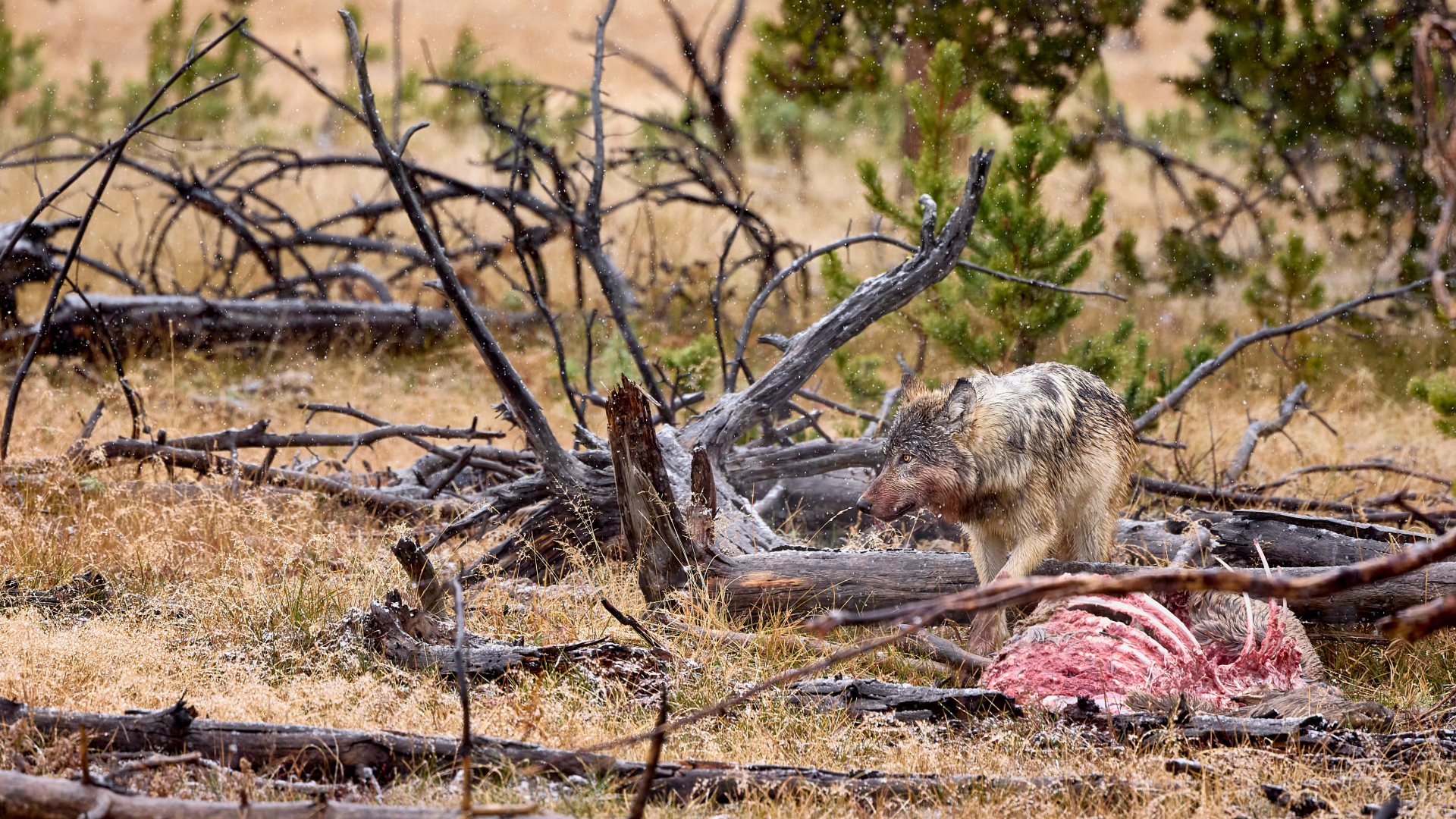
This young wolf is picking the last of the meat off of a carcass that was an adult elk seven hours before this shot was made. I don’t know if they were a low-ranking member of the pack that made the kill, or a lone wolf without a pack. They were very nervous and on high , looking around them after every bite of food, so I would guess lone wolf. If they were and the pack returned and caught them poaching they could be in mortal peril. But this day their bravery paid off.
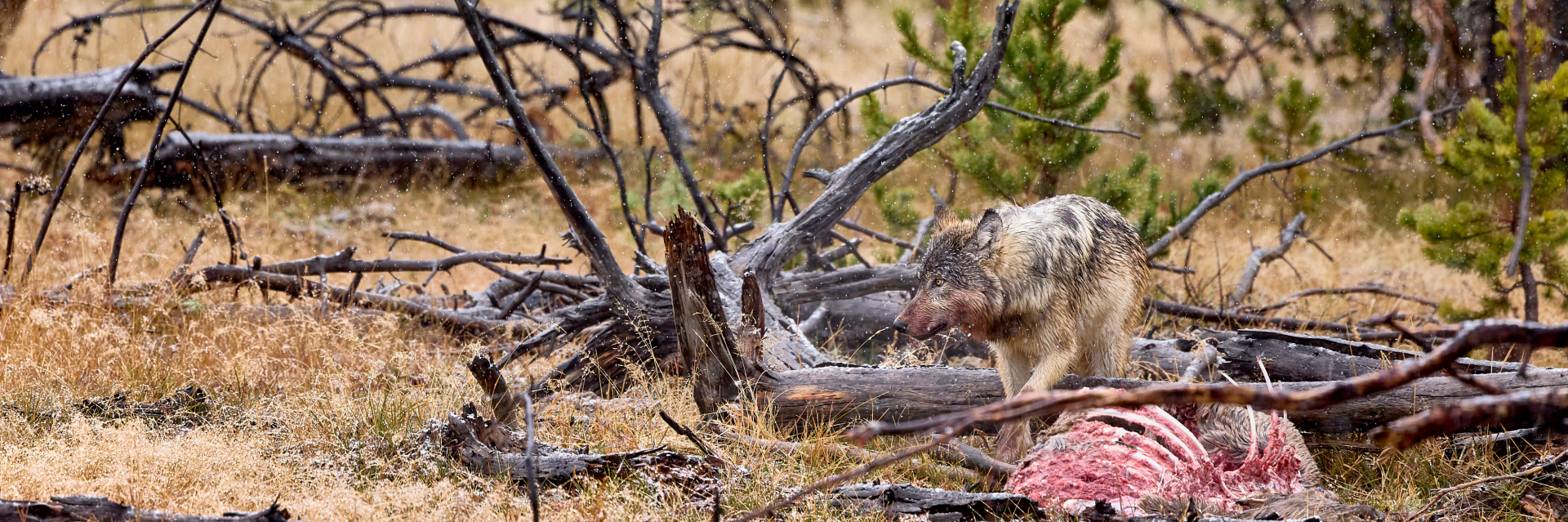
This young wolf is picking the last of the meat off of a carcass that was an adult elk seven hours before this shot was made. I don’t know if they were a low-ranking member of the pack that made the kill, or a lone wolf without a pack. They were very nervous and on high , looking around them after every bite of food, so I would guess lone wolf. If they were and the pack returned and caught them poaching they could be in mortal peril. But this day their bravery paid off.
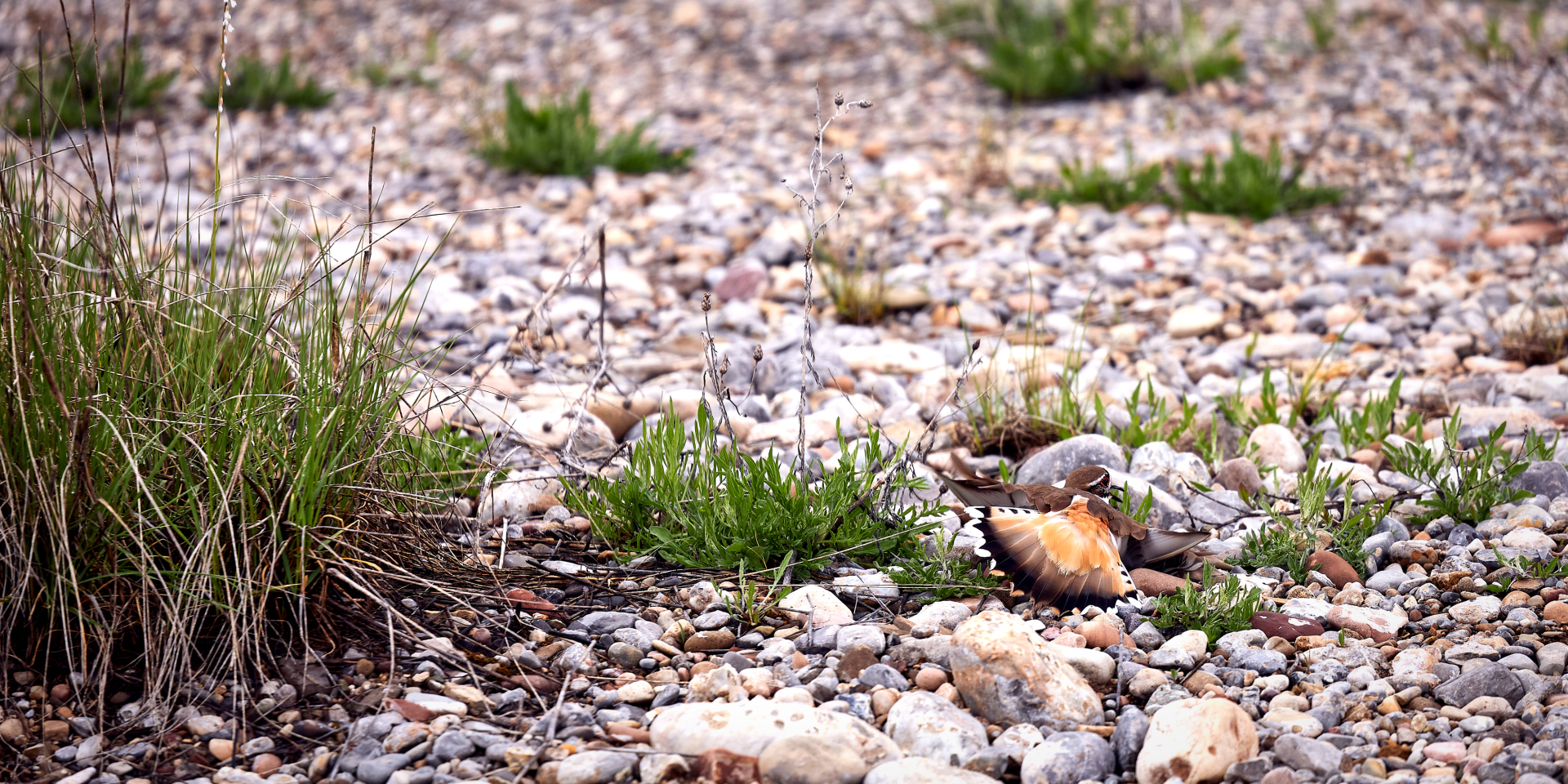
Killdeer are famous for their use of distraction displays called, “the broken-wing act” to lure predators away from their nests and young. Here is a Killdeer in an Oscar-worthy performance, luring me away from their nest. I didn’t go looking for it because it is too easy to mistake their eggs for rocks and crush them, but in scanning the area with my telephoto lens I didn’t see them. Another win for maternal instincts!